What an alcohol-free perfume actually is
In a conventional bottle, ethanol is the carrier. It dissolves the fragrance materials, evaporates quickly and lets the aroma settle on skin. An alcohol-free perfume swaps that carrier for something else, usually water, waxes or fatty oils. The scent is not simply the same juice with a different solvent: the base changes how the fragrance leaves the skin, how soft the opening feels and how the drydown shows up hours later.
The phrase is a shortcut, though. It tells you ethanol has not been added as the solvent. It does not mean the formula contains no chemical alcohols at all. Linalool and geraniol, for instance, are scent molecules from the terpene alcohol family, and Diptyque lists both among the ingredients of its solid perfumes. An alcohol-free luxury perfume is still a fully fragranced product, with the same need to read the ingredient list, and a good alcohol-free perfume is judged on composition and wear like any other.
Water instead of ethanol: Dior's alcohol-free eau de parfum
Dior presents J'adore Parfum d'eau as an alcohol-free eau de parfum with what the house calls a patented formula exclusive to Dior. On the product page the ingredient list opens with water and shows no ethanol. The fragrance is described as floral and fresh, built around neroli from Vallauris, jasmine sambac and Chinese magnolia, and it comes in 30, 50 and 100 ml bottles applied as a generous mist.
The perfume creation director, Francis Kurkdjian, says on the page that water gives the fragrance more soul and revives the flowers. That is a creator's statement of intent, not a measured result, so treat it as the maker's reading and form your own on skin. What you can verify directly is the bottle, the spray and the ingredient list.
How the spray feels in practice
A water-based spray behaves like any atomiser, yet many wearers notice a softer, damper first impression than with an ethanol spray. That is a subjective effect shaped by spraying distance, skin and room temperature. Wear it for a full afternoon before deciding, because the first minute says little about the rest. Shoppers weighing an alcohol-free perfume against a classic spray often change their mind once the drydown appears.
Balms and waxes: the alcohol-free solid perfume
The alcohol-free solid perfume is the easiest format to understand. Diptyque sells Fleur de Peau as a refillable solid balm described as free of alcohol, with musk, iris, ambrette and pink berries as its notes. The case holds 3 g, and only solid refills fit it, which the house sums up as refillable without limit. Its Eau Rose version is a scented wax with a rose heart, applied the same way.
You apply a solid perfume with your fingertips on the wrists, neck or the hollow of the collarbone. Diptyque points to pulse points: inner wrists and elbows, the nape and the hairline. There is no cloud of mist, so the effect stays close to you, and it travels in a bag without leaking. The trade-off is a small treated area, which makes placement and quantity matter more than with a spray.
Oils and other textures: reading an alcohol-free fragrance
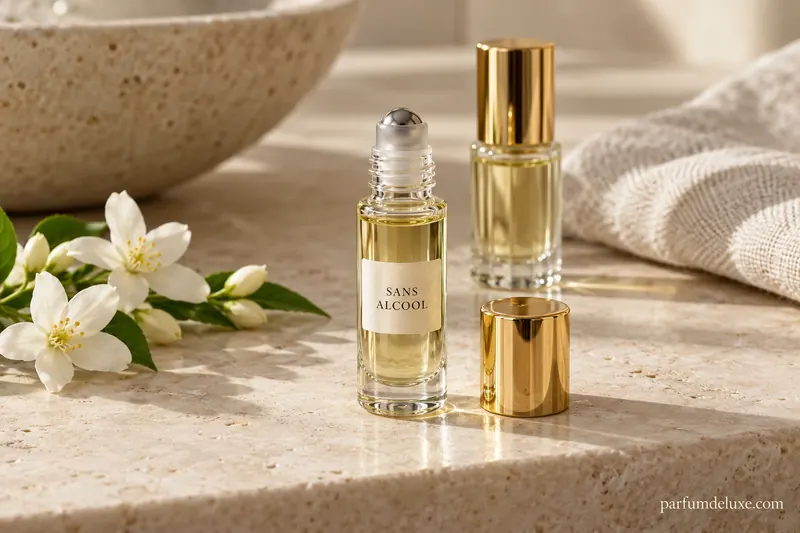
Perfume oils make up the third family. The scent sits in a fatty carrier instead of ethanol, giving a denser liquid that goes on in a few drops or with a roller and tends to stay where you put it. An alcohol-free fragrance in oil form warms with the skin, so it can feel quiet at first and rounder later on.
Start with very little. Because you wear an oil continuously, your nose adapts quickly and you may think the scent has vanished when others can still notice it. Resist adding more straight away; ask someone nearby, or give yourself a break and come back to it. Also follow the maker's advice on fabrics: some products are not meant for clothes and oils can leave marks.
Reading the label: free-from claims, INCI and allergens
The ingredient list is the most reliable document you have. It follows INCI naming in descending order of weight, and the word fragrance covers the aromatic composition, with the regulated allergens named separately. The Dior and Diptyque pages show names such as limonene, linalool, geraniol and citral beside water or waxes, depending on the product. The European Commission publishes the list of fragrance allergens that cosmetics must declare, and that list has been expanding.
Be sceptical of the phrase free from. France's consumer-protection authority, the DGCCRF, states that a claim of the type free from a substance is misleading when the formula contains that substance. Its survey of online cosmetics sellers also found missing or wrong ingredient lists on a noticeable share of sites. Compare the bottle, the retailer's list and the maker's own page when something looks inconsistent.
Finally, buying an alcohol-free perfume does not guarantee tolerance, because ethanol is only one ingredient among many. Some people react to fragrance materials, natural or synthetic. Patch-testing a small area of skin before wearing is a sensible habit, and anyone with sensitive or reactive skin should ask a health professional rather than rely on a product claim.
Longevity and projection: realistic expectations
No one can promise a fixed duration for an alcohol-free perfume, however prestigious the house. Staying power and trail depend on the formula, the amount applied, skin type, temperature and even humidity. Wearer reports are as mixed as for any perfume: some describe a close, skin-like presence, others a scent that lasts for hours. Hour counts quoted by sellers are not guarantees.
To compare fairly, test one product at a time on the same spot and write down what you notice after one hour and after four. A balm on the wrist reads very differently from a mist on a scarf. If you move to an alcohol-free luxury perfume from a classic spray, expect different habits: fewer sprays, more attention to pulse points and a gentler first impression.
Buying an alcohol-free luxury perfume with confidence
Choosing an alcohol-free luxury perfume starts with texture rather than scent family: do you want a mist, a balm for your bag or an oil measured in drops? Then read the notes the house gives, try the product on skin and wait. A reputable house states the size, the ingredients and how refills work; if any of that is missing, ask the adviser before buying.
If your choice is driven by a religious requirement, do not rely on the words alcohol-free alone: they are not a certification. Look for a specific attestation from an identifiable body and contact it if in doubt. And be wary of bargains on famous names, since counterfeit perfume is illegal, may contain uncontrolled ingredients and will not carry the mandatory information.