Why luxury perfumes are so expensive: several costs in one price
A high price tag pays for more than one thing. It covers the creation of the fragrance, the sourcing and handling of materials, the flacon, the box, the advertising and the retail network. Houses rarely publish how these are split, so a steep figure on its own does not tell you where the money goes.
Two very different purchases hide behind the same word. One is a scent to wear daily, judged on your skin. The other is an object to keep, judged on its making and its condition. Knowing which you want changes the questions worth asking and stops you paying for something you will never use.
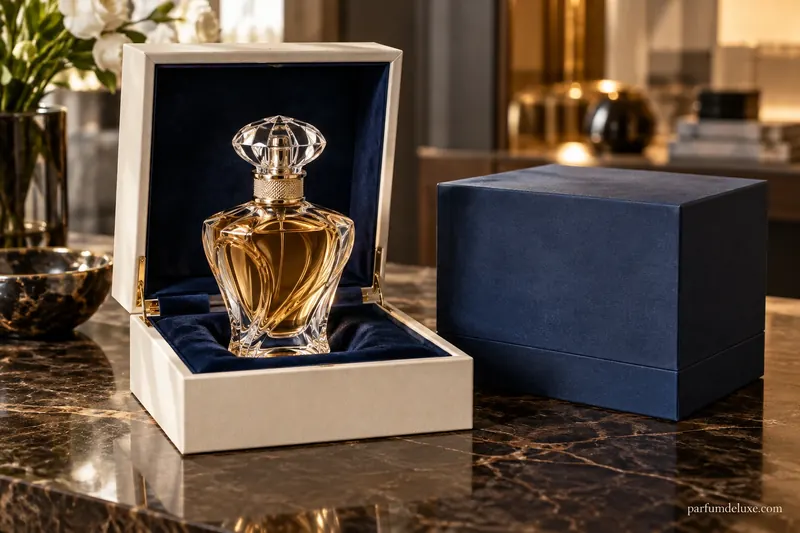
The crystal perfume bottle as a workshop object
A crystal perfume bottle is not comparable with a standard glass flacon. For Rêverie, its 2026 collector piece, Lalique says the flacon is made entirely of crystal in its Wingen-sur-Moder workshops through glassmaking and fusion at 1,200 degrees Celsius. The edition is limited to 500 pieces, with a launch announced for 1 November 2026.
Lalique’s own shop also lists collectible crystal pieces, flacons among them, starting from 810 euros. The range makes a plain point: the container can weigh as much as the contents in the final price. Paying for crystal is a collector’s choice, not a guarantee about the scent inside.
Why luxury perfumes are so expensive is partly a question of the bottle, then. A crystal perfume bottle that takes a team of specialists and a furnace is simply a different product from a moulded flacon, and its price reflects that, whatever the liquid inside costs to make.
Handwork that the house actually documents
Some houses spell out what is done by hand. For its Tortue bottle made with Baccarat, Guerlain explains that master glassmakers shape the crystal, engrave 88 stylised facets and polish it, while its Dames de Table hand-paint silk threads with the barbichage technique and seal the neck with wax. The house presents the piece as a Métier d’Art edition of the Tortue, first sculpted in 1914.
Details like these let you tie a price to identifiable hours of work. Look for what the maker documents rather than inferring quality from a price label. A vague speech about excellence justifies nothing until a concrete fact accompanies it.
Not every claim of craftsmanship deserves the same trust. A numbered certificate, a named workshop and a described technique are verifiable; a slogan is not. When a house explains its steps, you can judge for yourself whether the price seems proportionate to the work shown.
What makes perfume expensive inside the bottle
What makes perfume expensive on the liquid side? Natural materials depend on harvests, some preparations take long processing, and a complex formula ties up creative time. Yet a costly ingredient does not make a beautiful composition, and many expensive fragrances also rely on carefully mastered synthetic molecules.
Ask what the house says about the formula: concentration, origin of certain ingredients, the perfumer involved. If the answers stay general, the price mostly pays for positioning. If they are precise, you have something to compare, which you can then test against your own impression on skin. That is the honest part of why luxury perfumes are so expensive: some of the cost is real, and some of it is image.
Expensive luxury perfumes against a more accessible range
To measure the gap, compare equal volumes. At Clive Christian, the Original Collection, launched in 1999 according to the house, lists 310 pounds for several eaux de parfum in 50 or 100 ml and 650 pounds for No1 in 50 ml. At Marionnaud, a 50 ml eau de parfum from a major brand stood at 159 euros in late October 2026.
Those figures vary by retailer and by date, so check them before buying. They show how wide the ladder is: about 3 euros a millilitre for the major-brand reference, 13 pounds for Clive Christian’s No1 in 50 ml. No price on that ladder proves a better scent. Expensive luxury perfumes should earn their rank on your skin. It also helps to remember that why luxury perfumes are so expensive differs from house to house, so no single average can stand in for a proper comparison.
Limited editions and announced scarcity
A run of 500 does not create the same scarcity as a perfume sold permanently in shops. It can attract collectors, but scarcity proves neither superior quality nor a guaranteed future value. Mostly it makes the flacon harder to replace if you lose it or want to resell it.
Ask three questions: how many pieces, sold where, and with what certificate of authenticity? A numbered edition delivered with a case and documents from the house is likelier to hold its interest than a run whose size nobody knows. Be wary of adverts talking about investment: a perfume is not a financial product.
Resale deserves a word of realism. Collector flacons can be hard to sell, buyers want the case and papers, and the market is thin. Treat any later sale as a possible bonus, never as the reason for buying, and you will never be disappointed by a fragrance you simply enjoyed.
High-end perfume cost and the brand’s position
Part of the high-end perfume cost pays for the house’s image: boutiques, campaigns, events, personal services. Part goes to the retailer. All of that is legitimate, yet none of it improves longevity or the quality of the liquid, so separate what concerns manufacture from what concerns image.
The simplest test is to compare a few scents from different houses at similar prices, on skin, on two or three occasions. You may find that a cheaper luxury perfume pleases you more, which is good news for both your budget and your pleasure. Seen this way, why luxury perfumes are so expensive becomes a mix of facts you can check and image you can weigh.
Buying an expensive scent without a costly mistake
As the amount rises, so should the caution. Buy from the house itself or an authorised retailer, keep the invoice and the box, and check the batch number. Counterfeit perfumes are illegal and may contain unchecked substances; a fake in a handsome bottle is still a fake.
Always test the scent before committing to a large size, using a small patch of skin to spot irritation, and read the ingredient and allergen list. Expensive luxury perfumes are a pleasure; keep them a pleasure you chose deliberately, not an outlay you regret.