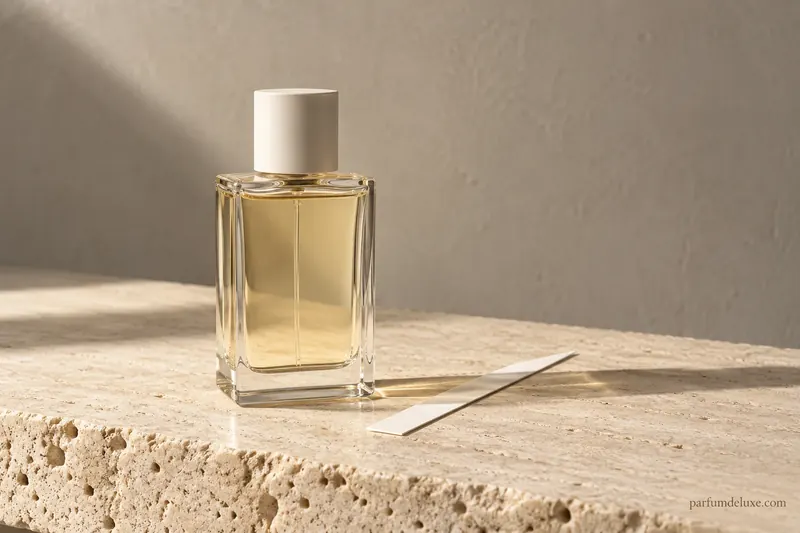
Bergamot perfume starts with a citrus from the Calabrian coast
Bergamot is the fruit of Citrus bergamia, a small tree that blossoms in winter. Genetic studies point to a probable hybrid of lemon and bitter orange. In Italy it is grown mostly along a short stretch of the Ionian coast in the province of Reggio di Calabria, where the climate suits it. Southern France, the Ivory Coast, Argentina and Brazil also grow it, but Calabrian bergamot is the benchmark for luxury houses.
Nobody eats it much; the value lies in the rind. The peel gives the essence that perfumers use and that flavours Earl Grey and Lady Grey tea. That double life explains why a bergamot note feels familiar long before you hold a bottle.
From peel to essence: how a bergamot note is made
The oil is cold-pressed from the rind, without heat, to keep the fruit’s fresh and faintly floral facets intact. Marc-Antoine Barrois notes in its own write-up that luxury houses sometimes call the material green gold. Quality still differs a lot between origins and producers. Bergamot perfumes depend on that gentle extraction to keep the fruit’s freshness.
The trade has a history of adulteration. Reference works report that cheaper oils have been mixed in with bergamot, and that Italy responded with testing and purity certificates. When a brand writes Calabrian bergamot PDO, as Acqua di Parma does for Bergamotto di Calabria, it points to a controlled origin. That says nothing about taste, though; only a skin test settles that.
Why bergamot opens so many fragrances
Highly volatile, bergamot is noticed the moment you spray and gives the perfume its first push before the heart settles. According to the Barrois guide it pairs well with neroli, orange blossom, vetiver, sandalwood and even oud. It works as a connector: neither too sweet nor too sharp, it eases the move from a bright start to deeper notes.
Its history runs deep. In the 1700s it scented gloves and went into early colognes. It remains a major ingredient of the original Eau de Cologne, which reference books link to Giovanni Maria Farina and the year 1709. Niche perfumery today can use far more generous doses than those light waters, which changes the depth of the note.
Wearers often describe bergamot perfumes as polished rather than loud. The bright start suits daytime and warm weather, yet it also lifts heavier woods and resins in autumn, which is why a bergamot perfume rarely feels out of season. Because the opening is so short-lived, a bergamot perfume is best judged by how its heart and base carry the same clean line; if the transition feels abrupt, the fruit may be doing all the work.
Central theme or opening note: two very different jobs
Among bergamot fragrances it pays to ask what role the fruit plays. Two official product pages show the gap.
Bergamotto di Calabria puts the fruit in front
Acqua di Parma lists effervescent top notes of Calabrian bergamot (PDO) and citron, then cedarwood and red ginger in the heart, and vetiver, benzoin and musk underneath. The house calls the family Citrus Woody and sells it in a bottle with Art Deco influences and thick, deep-blue glass. Here the citrus is the point.
Aventus uses bergamot as the first step
Creed’s journal says Aventus debuted in 2010 and describes a structure of hand-picked Calabrian bergamot, a pineapple accord and patchouli, with smoky, leathery birch in the base. Bergamot opens the story without owning it: once the start fades, fruit, smoke and earth take over the stage.
Bases that keep a bergamot note alive
On its own, bergamot disappears fast. In a bergamot perfume that aims to last, perfumers pair it with materials able to hold it. Cedar and vetiver supply a dry frame, benzoin a resinous roundness, musk a clean skin feel. The red ginger that Acqua di Parma lists adds a peppery warmth that avoids a plain cologne effect.
In another register, the same house names bergamot at the top of its Yuzu, beside yuzu itself and Sichuan pepper, where it acts as a bright relay rather than the subject. Check what the list names right after bergamot: that is what reveals the real direction of a bottle.
Calabrian bergamot, PDO labels and their limits
PDO, protected designation of origin, ties a product to a territory. On a perfume it usually tells you where the oil comes from, not how good the whole fragrance is. A house may also write Calabrian bergamot with no further detail, or use an accord partly rebuilt with synthetic molecules, which is not a flaw in itself, since some compositions owe their stability to such materials.
Treat the label as a clue to cross-check with your own nose. A natural-leaning bergamot note often feels rounder and slightly floral, whereas a more synthetic accord can read sharper and more linear. Neither route is better in itself.
Skin, sun and allergy: care with bergamot
Some bergamot oils contain bergapten, a compound linked to photosensitivity: on skin exposed to UV, repeated application may cause stronger redness. Psoralens drawn from bergamot oil were used in tanning products until 1995, although their risks had been known since 1959. Modern perfumes manage the issue, yet if your skin reacts easily, avoid spraying a spot that will sit in strong sunshine and use clothing instead.
As with every citrus, ingredients such as limonene and linalool can trigger reactions in sensitive people. Patch test on a small area, read the ingredient list and ask a health professional if in doubt. These pointers do not replace medical advice.
Judging a bergamot fragrance once the sparkle is gone
Put the perfume on skin rather than just paper, and note the zest impression straight away. Then wait an hour. Bergamot alone fades, so what remains is the real product. Is it dry wood, resin, a white flower, a fruit? That second stage decides whether you will like it at noon as much as at the first spray.
If you cannot choose between a bergamot perfume where the fruit is the subject and one where it opens a richer score, try one of each. You will soon know whether you want the clarity of a single fruit or the movement of a story. Either way, ask for a sample or miniature before committing to a large bottle.